Current Essay
Previous Essays

History Not Shared is a History Lost
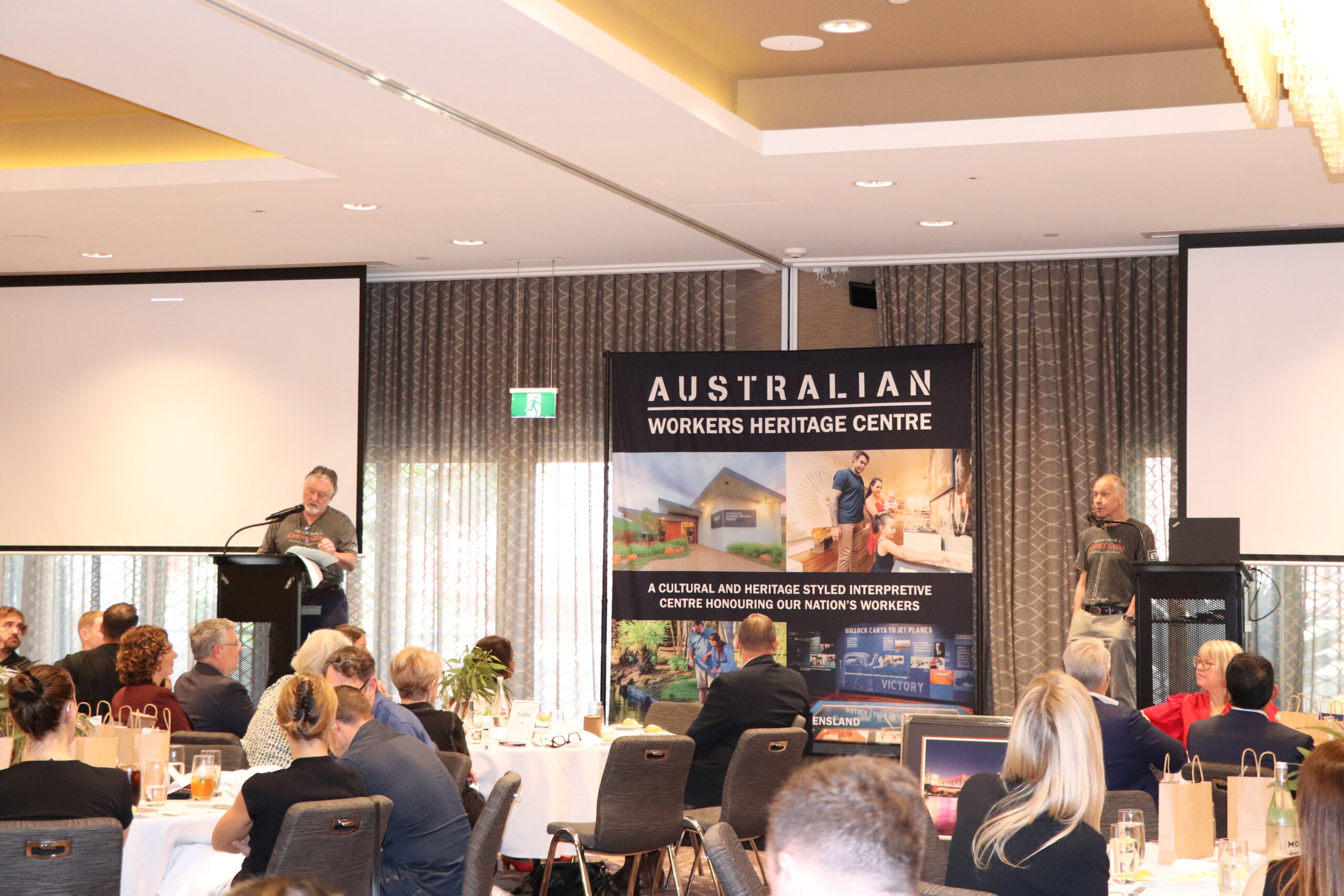
Recently, my good friend Graeme Watson and I, were given the opportunity to address a fundraiser for the Australian Workers Heritage Centre that included politicians, businesspeople and ordinary working people, alike.
The address followed the book launch of Voices Under a Ghost Gum; Barcaldine’s Place in Labour history, at Barcaldine during the Mayday celebrations. This was another opportunity to speak about one of the most important events in Australian history.
The address we gave which we chose to give as a question-and-answer presentation said it all, or at least we thought so.
How did the book come about?
You dobbed me in.
When we returned to Victoria after a 2024 visit to Barcaldine, we were concerned at how many people who should know about its history, didn’t. I was shocked to hear a prominent union leader say he had to google it to find out.
Labour Movement leaders shouldn’t be googling this moment in history; it should be in their DNA.
That set us on a journey to change that, and we began thinking about what two ordinary working people could do? Wherever we went it became part of our conversation – the story and the significance of those times that centred around Barcaldine.
That’s when the big fella here dobbed me in. In his discussions at the AWHC about raising awareness he said; “Oh, we’ll get Ken to write a book.” And then he told me. Thanks Graeme, you’ve done it to me again!
He knew I couldn’t refuse but if I was to write a book then its purpose would have to be a vehicle to get the story out there. A history not shared is a history lost.
I did dob you in, didn’t I? How did you find the support to write the book?
The Victorian Branch of my union gave us time to speak about the AWHC at its shop steward’s conference in 2025; a flash affair with over 400 delegates, and ETU union leaders from across Australia. After our address the delegates were wanting to know more and authorised a donation of $50 000 to the AWHC cause.
By then I had the book thought out and planned in my head and during a conversation with our National and Queensland union leaders, I put the idea to them. Queensland said you write it and we’ll finance it.
How good is this, I thought! I’ve got my National and State leaders by our side supporting the cause. This is the kind of support we need across the Labour Movement for the AWHC. What a great example we set.
Your working title was Why Barcy! I loved it, but why Barcy?
Because, for me, Barcaldine’s historical significance is equal to that of Eureka, and the eight-hour day. It’s a moment in history, not about striking unionists or Government insurrection, it’s about the beginnings of an egalitarian society; a moment in time that has defined Australia.
Wasn’t that already happening across Australia?
Maybe it was evolving but the Queenslanders made it happen. They said, “We’ve had enough of the sheep sheiks and the beef barons looking down their noses at us, dominating the Parliament and legislating to suit their needs with no thought for the working people they employ.”
The Queenslanders were recognising that to make any effective change to the masters and servants’ mentality of those times, they needed voices in Parliament. As historian Manning Clark put it; The time had come for the workers to prowl like lions in the corridors of political power.
And did they prowl the corridors of political power?
Too right they did! And they did it through the organised labour of unions with great success.
They formed a labour party, wrote a manifesto, and through byelections got the first ever labour party onto the parliamentary floor in 1892; a party of four. After the general election, the following year, there were 16 Labour members prowling the corridors.
It can be argued that it was the first ever political party in Australia as the conservatives were all independents with their own agendas.
By 1899 the Labour Party was such an effective force in opposition, the Governor of the day asked it to form a government when the conservatives squabbled over railway legislation and fell apart. Shock horror – the first socialist government anywhere in the world.
If that isn’t a definitive moment in Australian history, then what is? And Barcaldine had been at the centre of it all.
How effective has the book been in spreading the word so far?
Well, it hasn’t made me rich and famous, but it’s been effective beyond belief thanks to you Graeme.
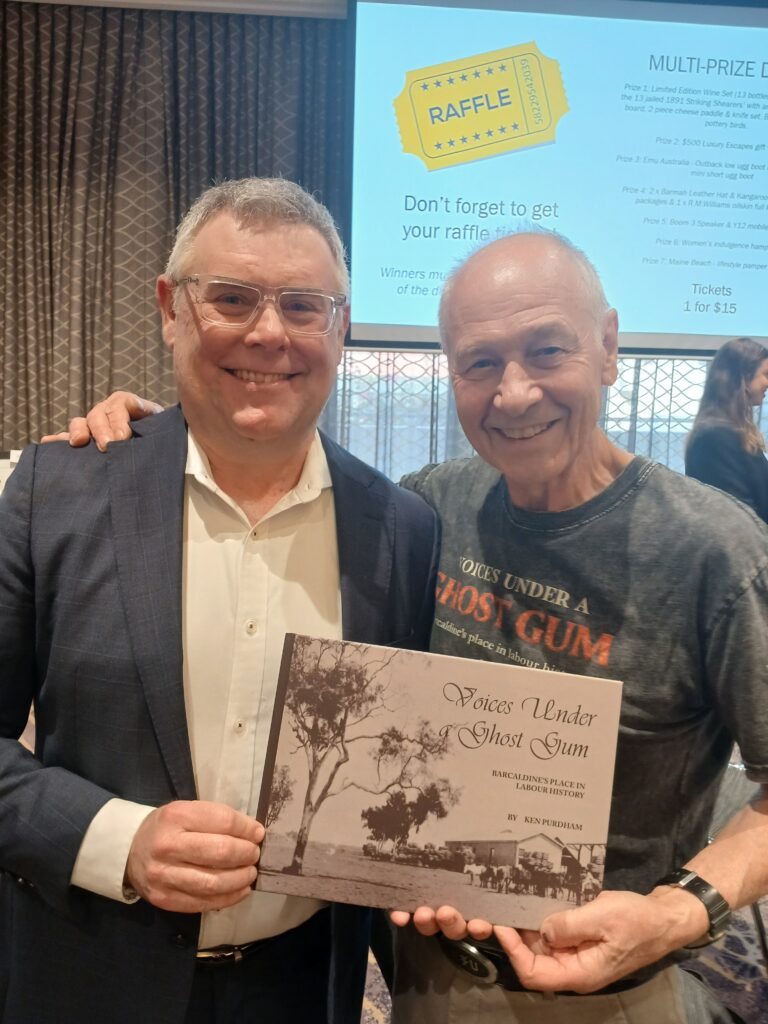
Those in the Labour Movement, that is; the ACTU, VTHC, Other Unions, Labor Politicians, and Union Members just can’t go to ground. Graeme knows where to find them. Wherever he goes it’s Ken’s writing a book about Barcaldine; Ken’s written a book about Barcaldine. Who else could knock on the Victorian Premier’s door and say; “look at the book Ken’s just written!” and then pose for a photograph.
So, how important is the AWHC in this story?
It’s pivotal!
The Heritage Centre has become the custodian of this iconic time and place in Australian history.
A hundred years on from that first Labour Party, Queensland working people were there again effectively saying our history cannot be forgotten. Strong believers such as shearer Bob Gleeson were arguing that if you can have a hall of fame for a saddle and a stock whip (the stockman’s hall of fame) then there should be a mecca for one of the most important times in Australian history.
With a lot of hard work and lobbying by believers, the AWHC came about. From Prime Minister Bob Hawke to Bob Gleeson, to the Queensland Trades and Labour Council, unions such as the ETU and AWU and all their Labour Movement mates, the mecca that is the AWHC was opened in 1991 with Prime Minister, Bob Hawke leading the Mayday march down the main street of Barcaldine.
How does the Centre operate as the custodian?
It’s a story telling Centre and while it tells the story of those times in 1880-90s of forming a Labour Party, it also takes visitors on the journey of the subsequent growth of working people in Australian society throughout our history.
How rewarding it’s been to hear visitors to the Centre say; “It’s not about unions and strikes we didn’t realise.”
And what a journey it takes us on.
When I look at today’s Labor Party, on the Parliamentary floor, what a journey from the Parliamentary floor that very first four member Labour Party stepped into in 1892. Today’s Labor Party truly is a voice of the people for everyone, and it is a party governing for everyone.
That’s the journey you can take through the AWHC ; that’s the journey we need to honour and champion.
And the big question, where to from here?
I think that’s for better minds than mine to decide.
What is clear, though, is that the Centre, as the custodian of such an important time and place in Australian history, must get the support it needs to continue.
Today’s generation of Labour Movement leaders need to step up look back and say, ‘We’ve got a job to do. We need to continue to share this history and not let it be lost’ If we don’t it will be a betrayal of those who went before us and this time in Australian history.