While Their Names Are Still Spoken
How it came about
When I agreed to write a drama for the Emerald RSL as part of the Community commemorations of ANZAC Day, I immediately wanted it to be a story of how the war affected the small, country town of Emerald as a community.
I went in search of stories. Who from the Emerald districts went to the Great War? How was the community affected? And how did it pick itself up again when the War was over?
Somewhere in the answers to those questions there had to be a story to tell.
It would be a drama played out in the local Gem Theatre about the community, by actors of the community for the people of the community. But what would work? What wouldn’t work? Could I do this on stage? It quickly became an exciting project with a thousand ideas spinning in my head to grab at and consider. I needed facts, substance, themes that were authentic. I needed to collect things. I’d have to toss out the dud ideas and play with what was left.
The RSL gave me a list of those boys who’d died in the Great War. I trawled soldier files, letters, Red Cross reports, and newspapers of the day. I wanted to be taken back in time to hear the voices of the people, hear them to tell their stories and find out who else went to war. Many were itinerant workers: farm labourers, gardeners, sawmill hands, horticulturalists, and orchardists; many working for Carl Noblius; their addresses often given as the Post office or the Emerald Coffee Palace.
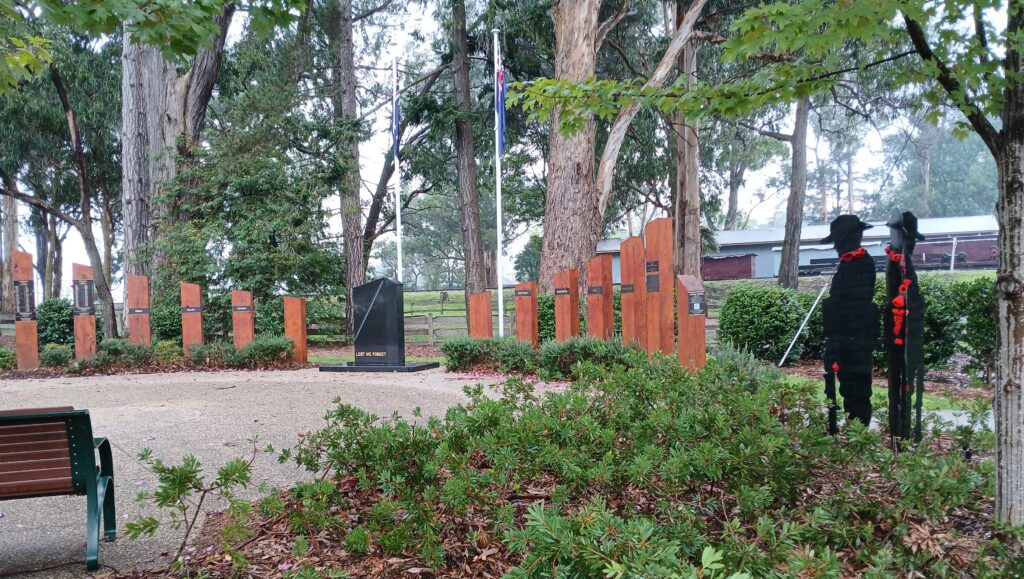
I wrote and recorded a script for the new audio Avenue of Honour that was being built in Emerald telling the story of those soldiers who had died. It took me very much into the time and place.
I visited the Emerald Museum, and it was full of Carl Nobelius. He and his Gembrook Nursery dominated the Emerald district in those years, and the Great War affected his business greatly.
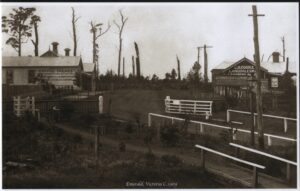
I found a notice in the Argus newspaper telling of an application for a wine license for the Emerald Coffee Palace by Emma Foxford. In the soldier files, I found that Samuel, her husband and Will, her son, had gone to war along with an illegitimate son Alfie Dennis. Back at the museum, I got excited to see photographs of the Coffee Palace and Emma Foxford.
In another of the soldier files I found a character reference for the local blacksmith’s apprentice, Billy Gott. The blacksmith was Charles Stapleton and back in the museum I found pictures of Charles Stapleton and his smithy.
But what about the rest of Emerald? Again, newspaper reports transported me back in time. The Prahran Cricket club came up to Emerald to play and stayed over at Avonsleigh House. The Prahran Chronicle reported their visit and painted a vivid picture of time and place. It spoke of gullies of beautiful ferns, the magnificence of the orchards, the fascination with Felton and Grimwade’s Eucalyptus distilling process. Visitors came and filled their baskets with an abundance of cheap fresh fruit and vegetables before jumping on the train going back to Melbourne.
There were numerous reports on the cricket and footy club games and the rifle club competitions. Often the names in the soldier files were reflected in the footy, cricket and rifle club scores and just about every young bloke had a rifle and was shooting targets at five hundred yards.
More newspaper articles told me of annual Christmas and Easter celebrations at Brookdale Farm; visitors coming from the city and music being played by the Emerald brass band. They told of the songs sung and the singers who sung them. And there were local council business reports on what roads were being improved, that the train timetable was being changed, that the first Emerald RSL was formed in 1921 and that electricity first came up to Emerald in 1934. I’d even found out that Mrs Stapleton had complained about the pig next door and that the council had sent a health inspector to take a look.
I surely was living in that past now and becoming a serial pest at the museum, often leaving with arms full of facts and anecdotes.
It was time I turned the facts and anecdotes into a story with people. Emma Foxford and Charles Stapleton put their hands up and it seemed to me that they, as the proprietors of the Coffee Palace and the local smithy, would have been at the centre of community life.
I sat in a coffee shop and chatted with Emma Foxford’s granddaughter and asked, “Did she have a sense of humour?”
“Oh no! And she wouldn’t tolerate any nonsense.”
“Was she scary?”
“Not really. But she was the strong one whereas my grandfather was the quiet one. She kept ducks and chickens and donated lots of eggs to charities. And she had many loyal friends who often came some distance to visit.”
“In my mind, I have her keeping order with the flick of her tea towel.”
“Yes, I could see her doing that.”
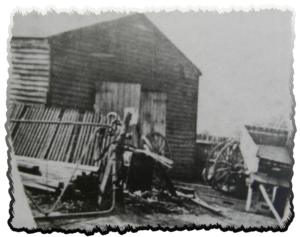
I listened to an interview with Nesta James, the daughter of Charlie Stapleton, the blacksmith and she reflected on how;
“Mum used to call the smithy the gossip shop and dad liked a drink and I once bought a pair of slacks, but when me and my friend would wear them we’d have to give the smithy a wide berth in case he saw them. But then one day, dad saw a couple of girls get off the train wearing slacks and said to my brother, they looked good. Then he turned to me and said I should get a pair. My brother just smiled ‘cause he knew I already had some.”
Studying the pictures, listening to the people talking about their past, drinking lots of tea with Chris Britton and the other museum people, I was able to work out closely where the Smithy and the Coffee Palace were situated in the growing town of Emerald. It stood to reason Emma and Charles would have known each other, maybe done a bit of gossiping themselves. Now these two people were beginning to live in my head, having conversations right in front of me.
Nesta James had also spoken about her mother and other neighbours keeping a cow each and how their bush telegraph warned them to bring the cows in off the roadside when the ranger was about, otherwise they’d cop a fine for grazing their animals in a public place. I now had a sense of a close-knit life in the Emerald community.
The soldiers’ story I wasn’t too worried about. They’d fought and died alongside soldiers I’d written about elsewhere. I knew their battles and I’d walked their battlefields; and as I followed the journey of each of the Emerald soldiers their stories were clear. The soldier files told me that they’d often joined up together, sometimes their enlistment numbers being consecutive. But with more than ninety young men who enlisted from the Emerald districts, who to choose. I decided on two fictional characters who could represent them all and my two soldiers would be best mates who worked for Nobelius and went off to war side by side.
John McCrea’s poem “In Flanders Fields”. It captured the sentiments of the soldiers at the time. “Short days ago, we lived felt dawn saw sunset glow, loved and were loved, and now we lie in Flanders Fields.” Many soldiers would carry that poem on their person, some even sending it back to their families. It was an authentic device I could use in this story for an idea fermenting in my head.
I found a letter written by Syd Ferres, the son of the Brookdale Farm owners, Councilor Robert and Mrs Ferres. Syd had sent the letter to his local newspaper and his voice was clear, as was the larrikinism so typical of the young men of the time. It included a song soldiers marched to at the Broadmeadows training camp; I had to fit it into the story somehow.
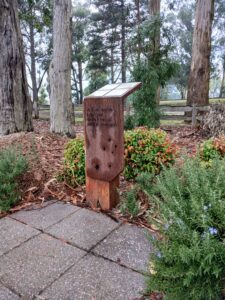
In every town and city of Australia, the soldiers went to war leaving family and girlfriends behind, and many of the soldiers were young and naïve. I’d found a reference in a death notice for Charlie Barnes, one of the Emerald soldiers honoured on the Anzac Memorial Walk. His fiancé declared there would never be another love in her life. And I listened to the anecdote of an Emerald local who told me his uncle went off to war, but his fiancé couldn’t wait for him and she married someone else.
So, what did those young women do while they waited for their soldiers to return? Across Australia, Red Cross branches swung into action including in Emerald. Women, in particular, emersed themselves into anything that would support the war. I decided on two more fictional characters who would represent girlfriends who sent their boyfriends off to fight with promises. And then I emersed them in the Red Cross effort.
I had my characters. Emma Foxford and Charles Stapleton; I would call my two soldiers Artie and Jim and their girlfriends I would call Mary and Ruth only because these were common names of the day. Now it was a matter of putting them on the stage of my mind and raising the curtain.
I shuffled the facts and anecdotes about as elements of community conflict began to surface. Time and again, in my head, my people acted out scenes of their stories, changed their stories and changed them again. In that process they also revealed themselves. The facts and anecdotes fell into their character traits, their backstories, and their futures. Story lines were being told to me by characters who were now individuals with their own idiosyncrasies. But where should it all begin and end?
In conversations with RSL President Peter Maloney and because of the script I’d written for the audio trail of the new Emerald Anzac Memorial Walk, the overriding theme of the drama could only be lest we forget; and that as long as we remembered the soldiers they would always live on in our hearts and minds.
I began to ask myself, what if the soldiers had been killed and were still trapped somewhere in the spiritual world, as if prisoners of war. And what if they were locked in that spiritual limbo because they didn’t know if they had made a difference or if they were still remembered.
I decided their journey would be to go back into those times to see how it all unfolded; to see if and how they were still remembered; and maybe then they could rest in peace. I seeded it clearly in the first scene on a battlefield, surrounded in poppies, by letting Jim say to Artie, “You know, we’re only truly dead when our names are spoken for the last time.” To which Artie replied; “And how would we know?”
“Let’s dare to go back and have a look?”
And where would their journey end? Maybe they could end at the first Emerald RSL ANZAC Day dawn service where they could stand and hear their names being spoken again and again by those of us who would remember them.
So, I had a start and a finish and, therefore, a journey. And then, because of all the journeys of other soldiers I’d followed in my research including those who had come back, I decided to have both soldiers going off to the adventure of war, then one being killed on his first day in battle and the other going through the war only to be killed at the end of it.
My thinking was that I could show in the soldier who was lost early in the war that he was still the larrikin who had never experienced the horrors of war whereas the soldier who went through all of it, could no longer function because of the horrors he’d experienced. The conversations between the two would explore how support for each other was so critical, not for those who had died but, for those who came back to continue to live in the community while loaded with the horrors of what they had experienced.
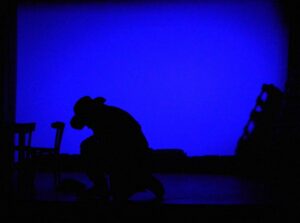
My dramatic highpoint in the drama was to have a monologue of Artie’s last words as he was being buried alive.
My scenes would switch from the battlefield to the Coffee Palace where we could experience the day-to-day living and support the community could give to the war effort. Those community figures could live out the agonies of waiting for their soldiers to return or reading in the newspapers that they wouldn’t be returning. They could wrestle with their loyalties to those they waved off to war; did that young bloke deserve a white feather or would the young women would wait not knowing if their loves would ever return?
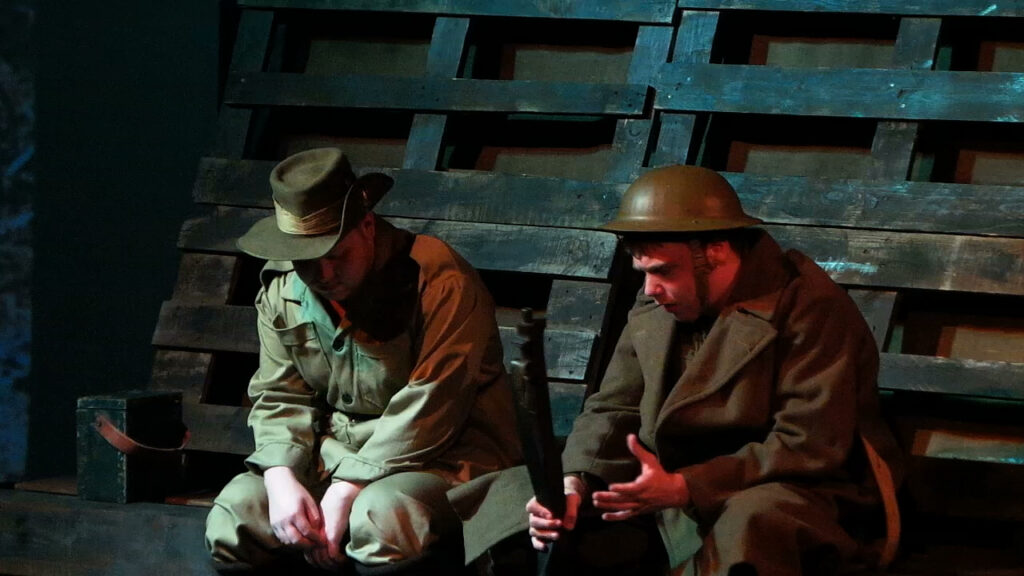
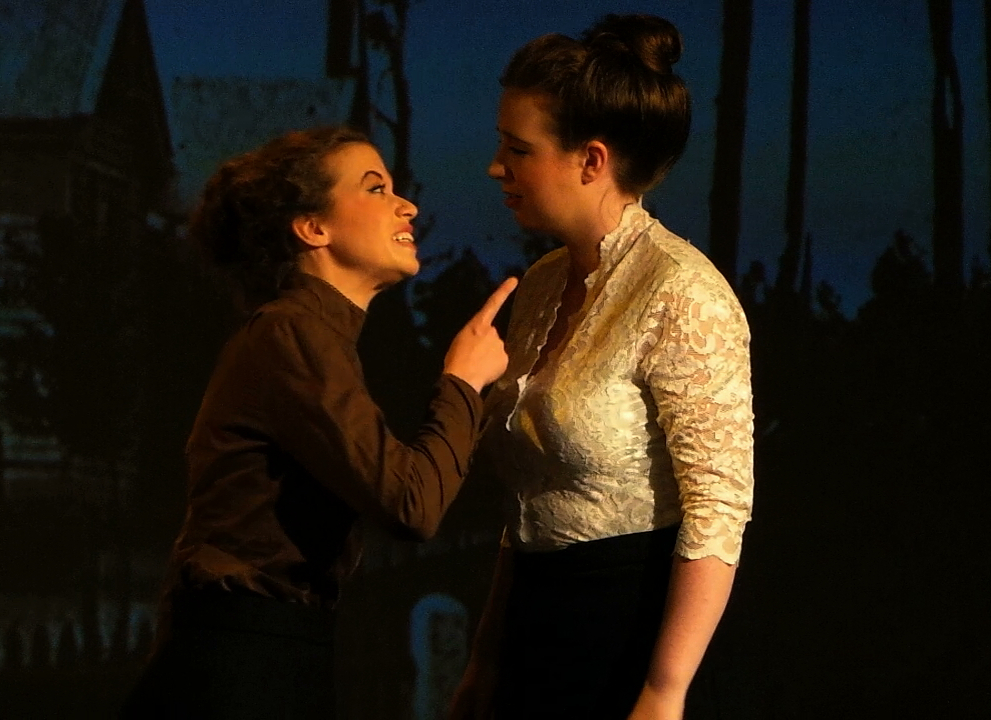
Then in discussions with my director Evie Housham, she suggested; “While Their Names Are Still Spoken” as the final title. It sounded good to me. While their names are still spoken, they will never be forgotten. And, with that we began the journey of turning the blueprint of a script into something an audience would experience.
I relive this story every ANZAC Day and even though I’d written it myself, to hear Artie’s final words in the total blackness of the theatre is still chilling.
References:
Books:
Emerald in Focus: A Photographic History; Emerald Museum, Emerald Victoria; 2006
Jenkinson Jo; Nobelius Heritage Park: An Illustrated Guide; Emerald Museum; Emerald, Victoria; 2002
Lycett, Tim; And Playle, Sandra; Fromelles The Final Chapters; Penguin Viking, Melbourne, Victoria; 2013
McCalman Janet; Struggletown : Public and Private Life in Richmond 1900-1965; Hyland House edition; Hyland House Publishing, South Melbourne, Victoria; 1998
Purdham Ken; Sparkies at War; K Purdham; Emerald Victoria, 2013
Organisations:
NAA
AWM
Emerald Museum
The Emerald RSL
Interviews:
Graems Teasdale
Nesta James
Chris Britton
Newspapers:
The Argus
The Age
The PhraranCronicle
Berwick Shire News
PackenhamGazette
Cranbourne Gazette
Camberwell and Hawthorn Advertizer
Box Hill Reporter
Melbourne Punch
The Toora Observer